

10 Best Online Payment Systems for Small Businesses
Essentials • 2026 05 11 • 8 min read

For small businesses, getting paid quickly is not just a finance issue, it is a brand experience. Research consistently shows that smoother checkout flows and flexible payment options can improve conversion rates, reduce cart abandonment, and build trust from the first transaction.
The right payment system does more than process cards. It supports your digital identity, connects with your website and CRM, automates receipts and follow ups, and helps you scale without adding manual work. For creators, service providers, and local brands, that matters.
Why your payment system matters more than ever
Online payments sit at the center of digital infrastructure. They affect cash flow, customer trust, operations, and even how professional your business feels. A clunky payment page can make a strong brand feel unreliable. A seamless one can make a small business look established from day one.
When choosing a platform, look beyond transaction fees. Consider:
- Ease of setup and how fast you can launch
- Branded checkout and invoicing options
- Integrations with your website, email, CRM, and accounting tools
- Support for subscriptions, deposits, payment links, and digital products
- Automation features that reduce admin work
- Customer experience across mobile and desktop
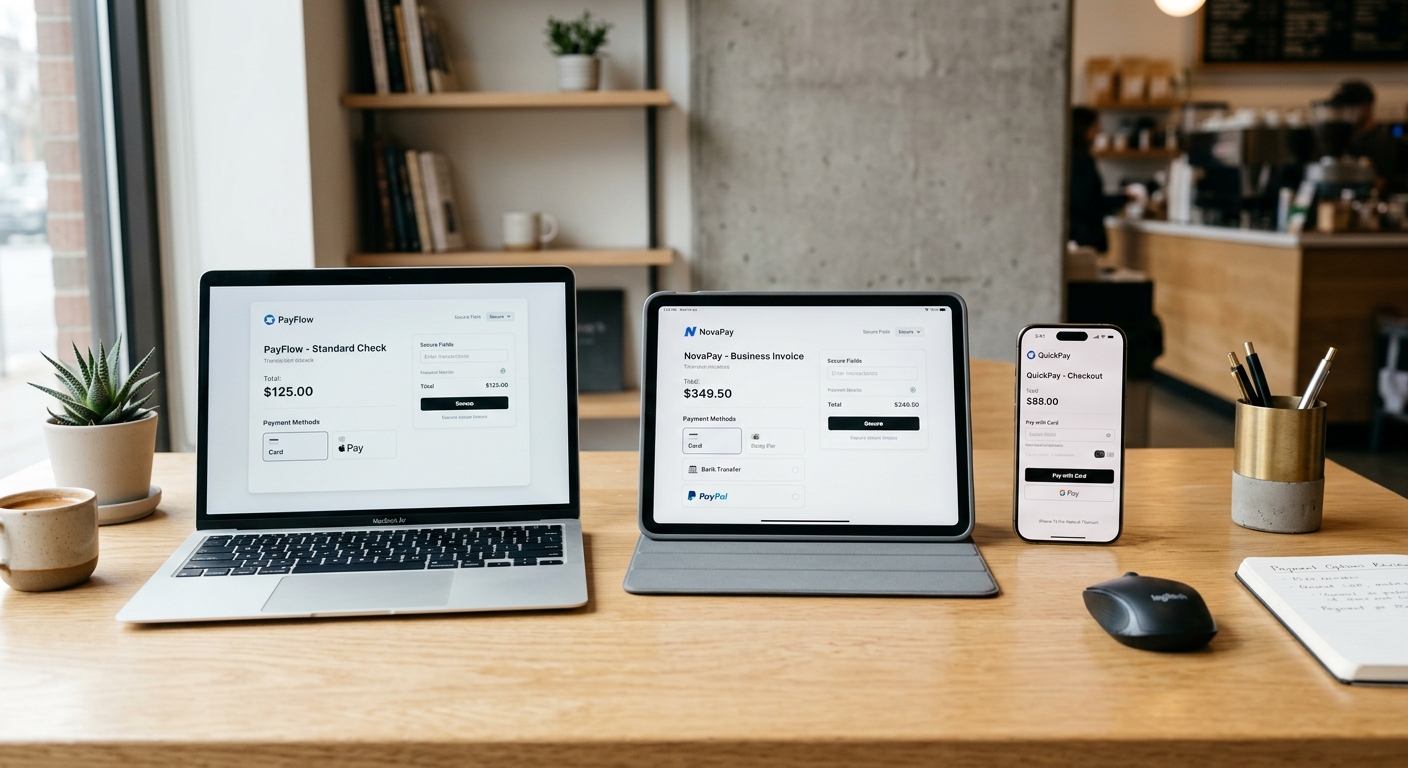
Example image caption: Comparing payment flows across laptop and mobile before choosing a platform.
What small businesses should compare first
Before picking a provider, map your actual sales model. A bakery taking local orders needs something different from a coach selling retainers or a creator selling templates.
Quick comparison criteria
| Factor | Why it matters |
|---|---|
| Fees | Directly impacts margins, especially on lower ticket sales |
| Payout speed | Important for cash flow and inventory planning |
| Branding | Shapes trust during checkout and invoicing |
| Automation | Reduces follow ups, receipt handling, and manual admin |
| Global payments | Useful for creators and digital businesses with wider audiences |
| Subscriptions | Essential for memberships, retainers, and recurring revenue |
If your business relies on organic growth, every payment touchpoint should feel aligned with your brand. That includes email confirmations, payment pages, receipts, and subscription management.

The 10 best online payment systems for small businesses
These platforms stand out for usability, flexibility, and fit for modern small business operations.
1. Stripe
Stripe is one of the strongest choices for digital first businesses. It offers powerful APIs, branded checkout, subscriptions, invoicing, payment links, and broad integrations with no code tools.
- Best for: service brands, SaaS, memberships, custom websites
- Strength: flexibility and automation
- Watch for: can feel advanced if you want the simplest possible setup
2. PayPal
PayPal remains widely recognized, which can increase trust for many customers. It is useful for quick setup, invoicing, and businesses that need a familiar payment option.
- Best for: freelancers, consultants, fast launch setups
- Strength: customer familiarity
- Watch for: branding customization is less polished than some alternatives
3. Square
Square is excellent for businesses that blend online and offline sales. It supports online stores, invoices, point of sale, and inventory in one ecosystem.
- Best for: retail, food businesses, local services
- Strength: omnichannel simplicity
- Watch for: some advanced features may require add ons
4. Shopify Payments
If your business runs on Shopify, using Shopify Payments often creates the smoothest ecommerce experience. It keeps storefront, checkout, and order management tightly connected.
- Best for: product based ecommerce brands
- Strength: native store integration
- Watch for: strongest value is inside the Shopify ecosystem
5. Wise Business
Wise is especially useful for businesses receiving international payments. It is not a full checkout platform in the same way as Stripe or Square, but it can reduce friction and cost for cross border transactions.
- Best for: international freelancers and remote service businesses
- Strength: transparent currency conversion
- Watch for: not ideal as your only customer checkout tool
6. Authorize.net
Authorize.net is a long standing payment gateway known for stability and support. It can fit businesses that need a more traditional merchant account style setup.
- Best for: established small businesses with specific gateway needs
- Strength: reliability
- Watch for: setup can feel less modern than newer platforms
7. Braintree
Owned by PayPal, Braintree supports card payments, wallets, and recurring billing with more customization than standard PayPal tools.
- Best for: app based businesses and brands needing flexible payment experiences
- Strength: supports multiple payment methods
- Watch for: better suited to teams comfortable with implementation details
8. Helcim
Helcim appeals to small businesses looking for transparent pricing and solid invoicing. It is often praised for merchant friendly terms and useful core features.
- Best for: small businesses watching fees closely
- Strength: transparent pricing structure
- Watch for: less universally adopted than Stripe or PayPal
9. Paddle
Paddle is designed for software and digital product companies, especially those selling globally. It helps simplify tax and billing management in many regions.
- Best for: software, digital tools, global digital product brands
- Strength: built for digital commerce complexity
- Watch for: less relevant for local service or physical product businesses
10. Gumroad
Gumroad is a practical option for creators who want to start selling digital products quickly without building a full commerce stack.
- Best for: creators, educators, template sellers
- Strength: simplicity and speed
- Watch for: limited control compared with a custom branded checkout stack
Best platforms by business type
The best choice depends on how you sell, not just what you sell.
| Business type | Recommended options |
|---|---|
| Freelancers and consultants | Stripe, PayPal, Wise |
| Local retail and service businesses | Square, Stripe, Helcim |
| Ecommerce brands | Shopify Payments, Stripe, PayPal |
| Creators selling digital products | Gumroad, Stripe, Paddle |
| Subscription and membership businesses | Stripe, Braintree, Paddle |
Example image caption: A side by side view of payment tools matched to ecommerce, service, and creator business models.
Automation opportunities most businesses miss
A payment system becomes much more valuable when connected to the rest of your operations. This is where AI and no code automation can remove repetitive tasks and tighten your customer journey.
- Send branded receipts and thank you emails automatically
- Create or update CRM contacts after each payment
- Trigger onboarding workflows for new clients
- Tag buyers by product, service, or subscription tier
- Push order and revenue data into dashboards
- Follow up on failed payments with personalized reminders
For a small team, these automations can replace hours of manual work each week. They also make your brand feel more consistent, because every step happens on time and in the right voice.
Branding and trust at checkout
Customers often make trust decisions in seconds. Your checkout page, invoice design, domain name, and payment confirmation all influence whether your business feels legitimate.
To strengthen trust:
- Use a professional branded domain
- Match colors and visual language across your site and payment pages
- Keep invoices clean and easy to understand
- Offer familiar payment methods when possible
- Make refund and support information easy to find
Payment systems are not just financial tools. They are part of your digital identity. A polished payment experience supports organic growth because satisfied customers are more likely to return, recommend, and complete future purchases.
How to choose the right one for your next stage of growth
If you are launching, prioritize speed, simplicity, and trust. If you are scaling, prioritize automation, analytics, and platform flexibility.
A simple way to decide:
- Choose Stripe if you want customization and scalable automation
- Choose PayPal if you need instant familiarity and quick setup
- Choose Square if you sell both online and in person
- Choose Shopify Payments if ecommerce is your main channel
- Choose Gumroad if you are a creator who wants to start selling fast
The most effective system is the one that fits your customer journey today while leaving room for where your brand is headed next.
Key Takeaways
- The best payment system supports both transactions and brand trust.
- Stripe, Square, PayPal, and Shopify Payments remain top choices for most small businesses.
- Your ideal platform depends on whether you sell services, products, subscriptions, or digital downloads.
- Automation can turn payments into a connected growth system, not just a checkout tool.
- A polished payment experience strengthens digital identity and improves organic customer retention.
Quick Stats
| Label | Value |
|---|---|
| Shoppers who abandon checkout when the process feels too long or complex | High across most ecommerce studies |
| Businesses that benefit from offering multiple payment methods | Most small brands serving online audiences |
| Admin time saved with payment automations | Often several hours per week for small teams |
Conclusion
Online payment systems are no longer back office tools, they are part of the customer experience and a key layer of modern digital infrastructure. When chosen well, they help small businesses get paid faster, look more credible, and automate the workflows that support growth. At Domain DESGNR, we help small businesses and creators build that full system, from branded digital identity to AI powered automation, so your payment experience works like a growth engine, not just a transaction page.
Tags: paymentsbrandingdigital identityautomation
