

Find Your Niche and Grow Your Reach for Higher Profit
Essentials • 2026 07 20 • 8 min read

Businesses with a clear niche often grow faster because their message is easier to understand, easier to remember, and easier to recommend. When people know exactly who you help and why you matter, your marketing works harder with less waste.
The real opportunity is not choosing between focus and growth. It is using a focused brand identity as the foundation for wider reach. With the right content, positioning, and automation, small businesses and creators can expand visibility without losing what makes them valuable.
Why niche clarity is the starting point
A niche is not a limitation. It is a shortcut to relevance. When your offer speaks to a specific audience with a specific need, your brand becomes easier to trust.
Many small businesses try to appeal to everyone, then wonder why their messaging feels flat. Broad positioning usually creates weak recognition. Specific positioning creates stronger conversion because the audience immediately sees themselves in your message.
What a strong niche does for your brand
- Clarifies who you serve
- Sharpens your visual and verbal identity
- Makes content creation faster
- Improves organic discoverability
- Increases conversion quality, not just traffic volume
Example image caption: Sticky notes showing audience pain points, brand promise, and content pillars arranged into a clear niche strategy.

How to recognize your real niche
Your niche is usually found at the intersection of three things, audience need, your proven strength, and market demand. Instead of guessing, look at the signals already present in your business.
- Which clients get the best results from your work?
- Which projects feel the most repeatable and profitable?
- What problems do people already come to you for?
- Where do you consistently stand out from competitors?
If you are still early, start by narrowing your message around one audience and one result. This gives you a clear testing ground for content and offers.
| Signal | What to Look For |
|---|---|
| Audience fit | People who quickly understand and value your offer |
| Results | Outcomes you can repeat with confidence |
| Demand | Questions, searches, and inquiries happening consistently |
| Margin | Services or products that create healthy profit |
The difference between a niche and a ceiling
A common fear is that choosing a niche will shrink opportunity. In practice, the opposite is often true. A niche helps you build authority first, then expand from a position of trust.
Think of it this way, your niche is your point of entry. Your reach grows after your brand earns recognition within that category. Once people know what you are known for, you can extend into adjacent offers, audiences, and platforms more naturally.
Expansion works best when it follows credibility
- Start with one clear problem you solve
- Build proof through case studies, content, and consistent positioning
- Expand into related needs your audience already has
- Use systems to scale content distribution without losing quality
How to expand your reach without diluting your brand
Growing reach is not about posting everywhere with random messaging. It is about extending one strong identity across the channels where your audience already pays attention.
Start with a simple framework, one message, multiple formats, repeated consistently. A clear niche makes this easier because you already know which problems, language, and outcomes matter most.
A practical reach expansion framework
- Website: Make your positioning instantly obvious on the homepage
- Search content: Publish articles that answer niche specific questions
- Social media: Repurpose one core idea into short posts, carousels, or clips
- Email: Nurture leads with useful insights tied to your offer
- Automation: Use AI and no code workflows to schedule, repurpose, and organize content
Example image caption: A content workflow dashboard showing one article transformed into social posts, email copy, and search content through automation.
Profit grows when positioning and systems work together
Reach alone does not create profit. Profit improves when attention flows into a brand system that converts. That means your identity, message, and automation should support each stage of the customer journey.
When your niche is clear, you can build simpler systems around it. Landing pages become more direct. Lead magnets become more relevant. Follow up becomes more personalized. Your content library becomes easier to scale because it all connects to the same brand promise.
| Brand Element | Impact on Profit |
|---|---|
| Clear niche statement | Improves lead quality |
| Consistent brand identity | Builds trust faster |
| Organic content strategy | Lowers dependency on paid reach |
| Automation workflows | Reduces manual work and response delays |
A simple content strategy for niche expansion
If you want broader reach, create content in layers. Start with your core niche topics, then branch into related questions that bring in adjacent audiences.
Use the 3 layer content model
- Layer 1, Core: Content directly tied to your main offer and audience problem
- Layer 2, Adjacent: Related challenges, tools, trends, and workflows
- Layer 3, Discovery: Beginner education, myth busting, and comparison content
This structure helps you stay recognizable while opening the door to new traffic and new customers. It also gives AI tools better source material for repurposing across channels.
What small businesses should automate first
Once your niche and message are clear, the next step is operational consistency. Automation helps you maintain visibility without relying on constant manual effort.
- Content repurposing from blog to social to email
- Lead capture forms connected to your CRM
- Inquiry response sequences
- Client onboarding workflows
- Internal content calendars and publishing reminders
The goal is not to sound robotic. It is to free up time so your brand can show up more consistently and professionally.
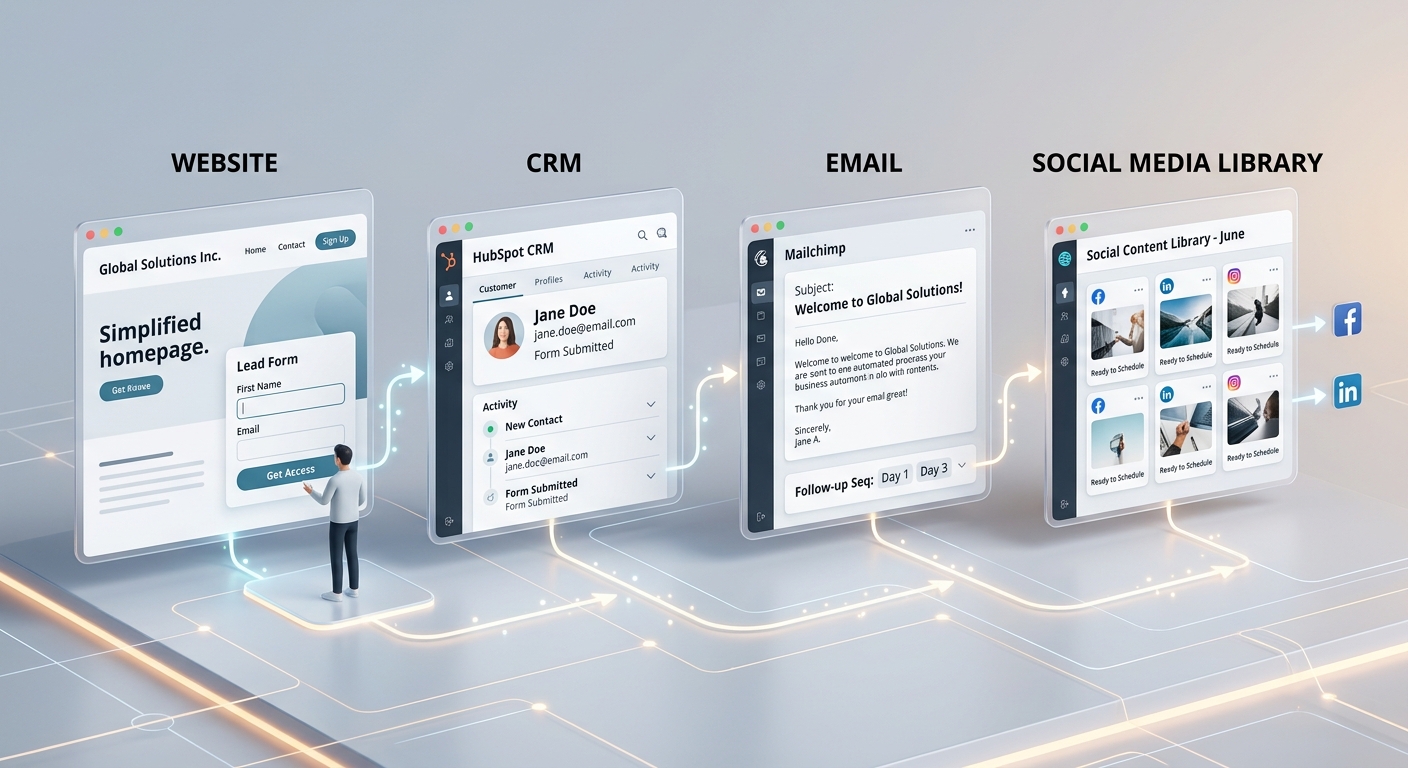
Example image caption: A no code automation board connecting website forms, content assets, email flows, and client onboarding steps in one clean visual system.
Metrics that tell you if your niche is working
You do not need dozens of dashboards to know if your positioning is getting stronger. A few focused metrics can show whether your niche is attracting the right attention.
- Website conversion rate from organic traffic
- Inbound inquiries from your target audience
- Content engagement on niche specific topics
- Average project value or customer lifetime value
- Time saved through content and workflow automation
If visibility is rising but conversion quality is weak, your reach may be growing faster than your positioning. If conversion quality is strong but volume is low, your niche is likely clear and your distribution simply needs to expand.
Key Takeaways
- A clear niche makes your brand easier to trust, remember, and recommend.
- Specific positioning usually leads to better conversion than broad messaging.
- You can expand your reach without losing focus by building from one strong core message.
- Profit improves when branding, content, and automation work as one connected system.
- The best growth strategy is focused identity first, wider distribution second.
Quick Stats
| Label | Value |
|---|---|
| Consumers more likely to trust brands with consistent presentation | Over 60% |
| Marketers who say targeted messaging improves engagement | About 70% |
| Businesses citing automation as a time saving growth tool | More than 75% |
Conclusion
Finding your niche is not about boxing your business in. It is about creating a sharper identity that gives your growth direction. Once your message is clear, expanding your reach becomes more efficient, more consistent, and more profitable. That is exactly where Domain DESGNR helps, building the digital infrastructure, brand clarity, and automated systems that turn focused businesses into recognizable online brands.
Tags: brandingorganic growthdigital identityautomation
